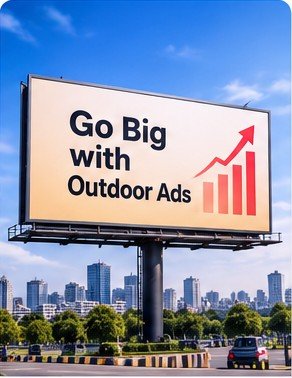
A great billboard can make a brand famous overnight. A poorly planned one can waste a large budget without a single enquiry. The difference is rarely the size of the hoarding. It is the quality of the planning behind it.
If you are thinking about outdoor advertising in Bengaluru, here is a clear, practical process to follow.
Step 1: Set a Specific Goal
Ask what you want the campaign to achieve. Common outdoor goals include:
Launching a new brand, project or product
Increasing store or showroom footfall
Promoting a seasonal offer or event
Building long-term brand recall in a particular area
A clear goal helps you choose locations, formats and the message.
Step 2: Understand Your Audience and Their Journey
Think about where your customers live, work, travel and shop. A school admission campaign needs to be seen by parents on school routes. A real estate project should be visible where homebuyers search and commute. Map the places your audience passes most often.
Step 3: Choose the Right Locations
Location is the heart of outdoor advertising. Evaluate each site on:
Traffic volume: How many vehicles and pedestrians pass daily?
Visibility and dwell time: Is the board visible from far away? Do vehicles slow down at a signal or junction?
Direction of view: Does the board face oncoming traffic?
Surroundings: Are there trees, buildings or other signage blocking the view?
Relevance: Is the location close to your business or your target neighbourhood?
Visit shortlisted sites at different times of day, including evening, to see lighting and traffic conditions.
Step 4: Select the Right Formats
Bengaluru offers many outdoor options:
Large-format hoardings and unipoles
Gantries and flyover branding
Bus shelters and bus wraps
Skywalks and metro-area branding
Kiosks and pole panels
Theatre and mall branding
Mixing two or three formats often produces better results than relying on one.
Step 5: Design for Quick Reading
Outdoor creative must be understood in about three seconds. Follow these principles:
One idea only. Avoid trying to say everything.
Large, readable fonts with strong contrast.
A single bold visual that supports the message.
A visible logo and a short, memorable call to action.
Lighting in mind. Check how the design looks at night if the board is lit.
Step 6: Plan the Budget Wisely
Costs depend on location, size, format, illumination and duration. Include these in your budget:
Site rental
Design and printing or flex production
Mounting and installation
Municipal permissions and fees where applicable
Maintenance and replacement during the campaign
Spreading your budget across a few strong locations usually works better than placing one board in a weak spot.
Step 7: Time the Campaign
Align your campaign with your business cycle: festivals, admission seasons, property launches, sale periods or product release dates. Start early enough to build familiarity before the peak.
Step 8: Integrate With Other Channels
Outdoor is powerful as a reach and recall channel. Support it with digital ads, social media and print so that people who see your hoarding can easily find you online.
Step 9: Track and Learn
Although outdoor is harder to track than digital, you can still measure impact. Use a dedicated phone number, a unique web address or QR code, track branded search growth in Google, and monitor footfall changes before and after the campaign.
Common Mistakes to Avoid
Too much text on the board
Choosing a cheap site that few people see
Ignoring permissions and compliance
Running the campaign for too short a time to build recall
Poor-quality printing that fades quickly
Let Experts Handle the Details
Peepal Ads brings city knowledge, site relationships and production support to every outdoor project. From site selection to installation and maintenance, we help your campaign run smoothly and look its best.
Planning an outdoor campaign in Bengaluru? Speak with Peepal Ads on +91 9845014950 or email peepalads1@gmail.com.