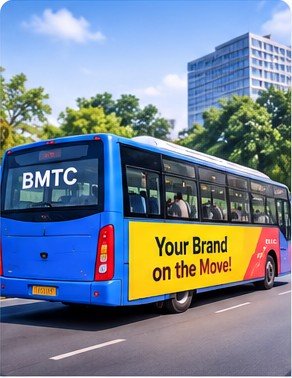
Bengaluru never stops moving. Every day, thousands of buses carry commuters through traffic junctions, tech corridors, markets and residential neighbourhoods. A brand message on the side of a bus travels the same route, in front of the same crowds, for as long as the campaign runs. That is the strength of bus advertising: a moving billboard that reaches people wherever they go.
This guide covers how bus branding works, the formats available and how to get the best return from your transit campaign.
Why Choose Bus Advertising?
Reach across the whole city
Unlike a fixed hoarding seen by one stretch of road, a bus covers many areas in a single day. You reach office-goers, students, shoppers, homemakers and two-wheeler riders alike.
Repeated exposure
Commuters often take the same route daily. Seeing your brand again and again builds recall faster than a one-time impression.
Always on
A bus advertisement works every hour the bus is on the road, in daylight and under street lights.
Strong value for money
Compared with many other mass-reach formats, transit media offers wide exposure for a relatively contained budget.
Common Bus Advertising Formats
Full bus wraps: The entire exterior carries your branding for maximum impact.
Back panel ads: Seen directly by the vehicles stuck behind the bus. Excellent in dense traffic.
Side panel ads: Large, visible surfaces facing pedestrians and neighbouring traffic.
Roof and window branding: Additional space for supporting messages.
Interior panels: Reach seated commuters who have time to read.
Bus shelters and stops: Static branding where people wait, giving longer viewing time.
How to Choose the Right Routes
A strong campaign starts with route selection rather than the number of buses.
Know your customer. A coaching institute should favour routes near colleges and student areas. A premium apartment project should prefer routes through affluent neighbourhoods and business districts.
Look at commercial corridors. Routes through busy markets, IT parks and main roads deliver high visibility.
Match routes to your outlet. If you want footfall, concentrate branding on routes that pass near your store, showroom or office.
Mix city and intercity. BMTC buses suit hyperlocal reach inside Bengaluru, while KSRTC buses extend your message to other towns and highways across Karnataka.
Creative Tips for Better Bus Ads
Keep the message short. Passers-by have only seconds.
Use bold colours and high contrast so your design stands out from the street.
Make the logo large and easy to spot from a distance.
Include one clear call to action such as a phone number or website.
Avoid tiny text, long paragraphs and cluttered images.
Design for the shape of the bus panel, not just a flat poster.
Campaign Duration and Frequency
Transit advertising works best when sustained. Short bursts can create buzz for a launch or festival, while longer campaigns of several weeks or months steadily build familiarity. Many advertisers combine buses with hoardings and digital ads to keep their message everywhere the customer looks.
Permissions and Quality Production
Transit branding requires approvals from the transport authority and high-quality printing and mounting that can withstand sun, rain and daily wear. Working with an experienced agency helps avoid delays and poor-quality finishes.
Launch Your Transit Campaign With Peepal Ads
Peepal Ads handles BMTC and KSRTC bus branding from route planning and creative guidance to booking and execution. Our team helps you get maximum visibility across Bengaluru and Karnataka.
Want your brand to travel the city? Contact Peepal Ads at +91 9845014950 or peepalads1@gmail.com for a free transit advertising plan.